Old Cloverdale's Home Prices Look Soft. The Money Moving In Doesn't Agree.
September 3, 2026
September 3, 2026
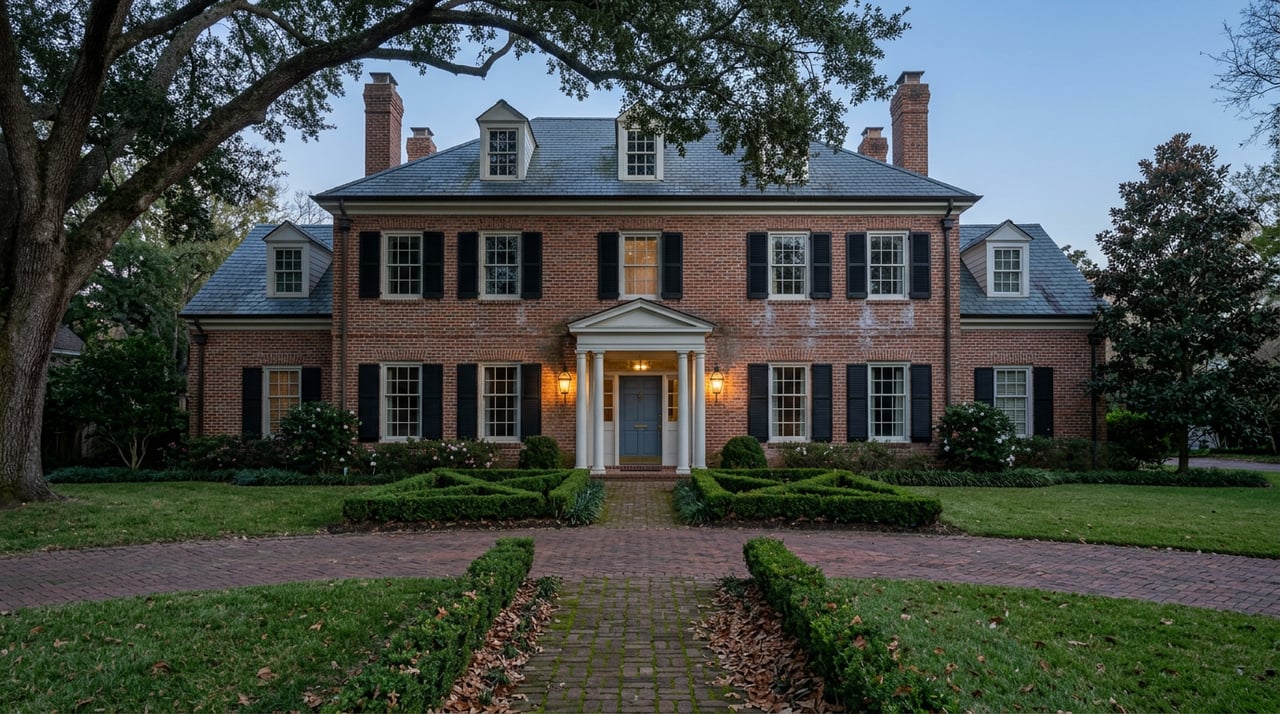
Why would a development group that has already put close to $25 million into six blocks of Montgomery real estate, with plans to double that in the next few years, keep signing purchase agreements on streets where the median home price just slipped? That is the question sitting underneath Old Cloverdale right now, and it is not a rhetorical one. It is the kind of question a buyer should ask before they get attached to a wraparound porch on Felder Avenue.
Here is the wrinkle that catches people off guard first, though, and it has nothing to do with price. Old Cloverdale has been a locally designated historic district since December 17, 1996, under Montgomery City Ordinance 49-96. Old Cloverdale's historic-district compliance page says that any exterior change to a home inside the district—a new paint color, a driveway pad, a tree removed, or an addition—has to go through the city's Architectural Review Board and receive a Certificate of Appropriateness before work starts. Buyers who fall for a bungalow because of its bones sometimes discover only after closing that the porch railing they wanted to swap or the parking pad they wanted to pour needs sign-off first. It is not a deal-breaker. It is a scheduling reality, and it is worth building into your timeline before you write an offer, not after.
That single layer of process is also a clue to the bigger puzzle. A neighborhood where every visible change runs through a review board is a neighborhood where character changes slowly and investment dollars show up before comparable sales catch up to reflect them. That gap, between what is being built and what the price data says, is the real story here.
Two things are true about Old Cloverdale at the same time, and neither one is wrong.
The first: commercial investment in the district has been unusually active. In July 2026, WSFA reported that the local investment group Noble Investments purchased two more properties in the Old Cloverdale and Garden District area for a combined $480,000, a deal brokered by Leitman Perlman. One property sits at 1702 Norman Bridge Road, a long-vacant former medical center. The other is a three-storefront strip at 1614 South Decatur Street, most recently home to a pizza restaurant and a barber shop. Noble's president, Mack Cornwell, a Montgomery native, has said the firm has spent nearly $25 million in the area over the past decade and intends to at least double that figure in the years ahead. He has pointed to infrastructure work led by Councilman Andrew Szymanski as a reason the firm keeps coming back to this particular part of town.
That purchase followed close behind another visible project. In March 2026, WSFA reported that the 11,000-square-foot Old Cloverdale Village reached core-and-shell completion on East Fairview Avenue, directly across from the Capri Theatre. The development, a partnership between the Birmingham-based FiveStone Group, Bayer Ventures, and New York-based D&A Companies, brought in a wine bar, coffee shop, and bookstore concept called House of Alchemy from local entrepreneur Morgan Chappell, a neighborhood ice cream shop called Cloverdale Creamery from Sam Bush, and Big Bad Breakfast, the Southern restaurant from James Beard Award-winning restaurateur John Currence, which was slated to open there in late March. Across the street, the Capri, Alabama's longest continually operating movie theater, marked its 85th anniversary this July, several years into a community-funded restoration that has included a new marquee and updated seating.
The second thing that is true: none of that has yet shown up in the residential sale-price data. As of June 2026, the median home price in Old Cloverdale sits at $258,500, and portal trackers measuring the trailing twelve months put the median sale price closer to $249,950, down somewhere between 2 and 4 percent year over year depending on which snapshot of the data you catch. Homes in the district are also sitting longer than the market average, typically 74 to 83 days compared to a national figure closer to 53 to 58 days.
Here is what that looks like side by side.
| What's happening | Figure | Window |
|---|---|---|
| Noble Investments purchase (2 properties) | $480,000 | July 2026 |
| Noble Investments cumulative spend in the area | ~$25 million, to be doubled | Past decade, ongoing |
| Old Cloverdale Village redevelopment | 11,000 sq ft, core-and-shell complete | March 2026 |
| Median home price, Old Cloverdale | $258,500 | As of June 2026 |
| Median sale price, trailing 12 months | $249,950, down 2 to 4% YoY | Mid-2026 |
| Typical days on market | 74 to 83 days | Mid-2026 |
Reading those two columns as a single story is where most people go wrong.
Old Cloverdale is a small neighborhood. One portal recorded just four home sales in the district over a recent month. That is not a market, in the statistical sense. It is a handful of transactions, and a handful of transactions can swing a median several percentage points in either direction depending on whether a large historic renovation or a smaller fixer-upper happened to close that particular month. A neighborhood with roughly 1,374 residents does not generate the sales volume that smooths out those swings the way a larger suburb does. That alone explains part of the gap between a 2 percent dip in one data pull and a 4 percent dip in another. Different sample windows, different answer, same small neighborhood.
The other part of the explanation is timing. Commercial investment and residential comps do not move on the same clock. A developer buying a vacant medical center or backing a wine bar is making a bet on where foot traffic and neighborhood energy are headed over the next several years. A home sale closes on whatever a buyer and seller agreed to on a specific day, based on the house in front of them and the comps available at that moment, comps that reflect the neighborhood as it existed before Big Bad Breakfast opened its doors and before the Capri's latest anniversary crowd walked past storefronts that used to sit empty. Investment dollars lead. Appraisals and closed sales lag behind them, often by a year or more, because that is how long it takes for a new restaurant or a renovated retail strip to change buyer behavior in a way that shows up in a stack of comparable sales.
None of this means home values are guaranteed to rise because a development group is spending money nearby. Investment can also fail to translate into residential lift, particularly in districts where architectural review adds real time and cost to any renovation a new owner wants to make. What the current numbers do suggest is that Old Cloverdale is a neighborhood where the visible signs of momentum, new tenants, restored storefronts, a theater marking 85 years, are running ahead of what the sale-price data currently reflects. For a buyer who values a walkable historic district and is comfortable with the review process that comes with it, that gap is worth understanding before it closes. For a seller sitting on a home in the district right now, it is worth knowing that your comps may not yet capture what is happening two blocks away on East Fairview.
Does the historic designation mean I can't renovate my home? No. The designation does put limits on exterior work. Build the approval timeline into your renovation plans from the start.
If investment is rising, will my home's value definitely go up? Not necessarily, and no one can promise that. Commercial investment is one signal among several, and residential comps depend on the specific home, its condition, and what closes nearby in the months ahead.
Why do different websites show different price trends for the same neighborhood? Small neighborhoods produce small sample sizes. A handful of sales in a given month can shift a median noticeably, which is why you will see different percentage changes depending on which tracking source and time window you're looking at.
If you are weighing a purchase in Old Cloverdale, the Garden District, or another one of Montgomery's historic pockets, and you want a clearer read on what a specific property's history, review requirements, or realistic timeline look like, that is exactly the kind of conversation worth having before you write an offer. Brandon Smith Homes has spent more than two decades working with buyers and sellers of historic and character-driven homes across Central Alabama. Let's Connect.
This article is general information, not legal, tax or financial advice. Consult a qualified professional about your situation.
Stay up to date on the latest real estate trends.
Experience a client-first approach backed by local expertise, strategic guidance, and exceptional service from start to finish. Let's connect.